Easy Bunny Crafts for Toddlers: 20 Fun and Simple Spring Projects
Key Takeaways
Quick Answer

Easy bunny crafts for toddlers are simple, hands-on art projects that use common household materials to create adorable rabbit-themed creations. These crafts typically involve paper plates, construction paper, cotton balls, and basic supplies that support fine motor skills development while keeping your little one engaged. Perfect for spring, Easter, or any time of year, these bunny crafts for kids require minimal setup and create maximum fun!
Introduction
Are you looking for fun and engaging ways to keep your toddler busy this spring? Bunny crafts are the perfect solution! These adorable projects combine creativity with learning, giving your little one the chance to explore colors, textures, and shapes while developing essential skills.
Christine here, and as a mom of three, I know how challenging it can be to find activities that are truly toddler-friendly—not too complicated, not too messy, and definitely not requiring a trip to the craft store for expensive supplies. That’s why I’ve gathered these easy bunny crafts for toddlers that use items you probably already have at home. If you’re looking for more festive ideas, consider exploring fun christmas crafts for toddlers that allow for creativity without the usual hassle. Simple projects like making handprint ornaments or paper snowflakes can bring joy and smiles to your little ones. Plus, these activities can create cherished holiday memories while keeping the mess to a minimum.
Whether you’re preparing for Easter, celebrating spring, or just looking for a rainy-day activity, these bunny crafts for preschoolers will spark creativity and provide wonderful bonding time. Each project includes developmental benefits, so you can feel great knowing your child is learning while having fun. Let’s hop into these adorable bunny craft ideas!
What Are the Best Easy Bunny Crafts for Toddlers?
The best easy bunny crafts for toddlers combine simple materials, quick completion times, and clear developmental benefits. Paper plate bunnies, cotton ball bunnies, and handprint bunnies top the list because they require minimal supervision, use household items, and create adorable keepsakes your family will treasure.
These crafts work well for children ages 2-5 because they focus on basic skills like gluing, painting, and cutting (with supervision). The key is choosing projects that match your child’s current abilities while gently challenging them to try new techniques.
Why bunny crafts work so well for toddlers:
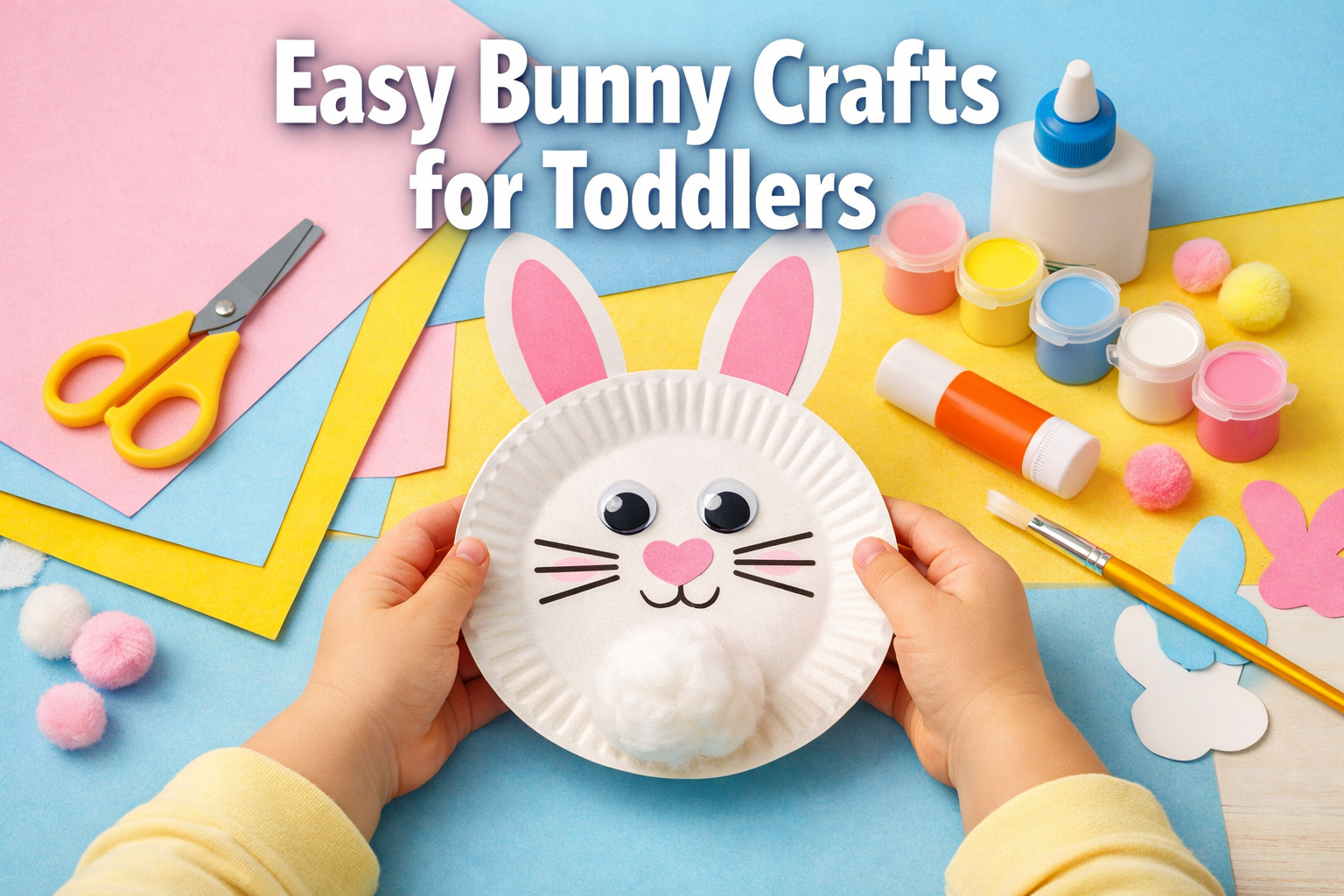
Paper Plate Bunny Craft
The paper plate bunny is one of the most popular Easter bunny crafts for toddlers because it’s incredibly simple and produces adorable results every time. Your little one will love transforming a plain white plate into a fluffy bunny face!
Materials needed:
Step-by-step instructions:
- Help your toddler cut two long oval shapes from pink construction paper for bunny ears
- Glue the ears to the back of the paper plate at the top
- Let your child glue googly eyes onto the plate
- Add a pink pom pom for the nose
- Draw a simple mouth with a marker
- Glue cotton balls around the edge for a fluffy border
Developmental benefits: This craft builds hand-eye coordination as your toddler practices gluing small items in specific spots. It also introduces spatial awareness as they learn where facial features belong.
Pro tip: If your toddler is under 3, pre-cut the ear shapes to reduce frustration and keep the activity flowing smoothly. This is a wonderful fine motor skills activity that doesn’t feel like work!
Cotton Ball Bunny
The cotton ball bunny craft offers wonderful sensory play while creating an adorable fluffy rabbit. This is one of the most tactile bunny crafts for kids, perfect for toddlers who love touching different textures.
What you’ll need:
How to create it:
- Draw or print a simple bunny outline on white cardstock
- Let your toddler pull apart cotton balls (great for strengthening finger muscles!)
- Apply glue inside the bunny outline
- Have your child press cotton balls onto the glued area
- Cut small pink circles for the inner ears and nose
- Glue these details in place
- Add eyes and draw whiskers
Why toddlers love this craft: The fluffy texture of cotton balls is irresistible to little hands. Pulling them apart and sticking them down provides excellent sensory input and fine motor practice.
Skill development focus: This activity strengthens the pincer grasp (using thumb and forefinger together), which is essential for later skills like writing and buttoning clothes.
Paper Bag Bunny Puppet
Paper bag bunny puppets bring crafts to life through imaginative play. This is one of those easy bunny crafts for kids that keeps giving long after the glue dries!
Supplies you’ll need:
Creating your puppet:
- Keep the paper bag folded flat
- The bottom flap becomes the bunny’s face
- Cut two long ears from construction paper
- Glue ears to the top back of the bag
- Add googly eyes to the flap
- Cut a pink oval for the nose and glue it where the flap meets the bag
- Draw whiskers and a mouth
- Let your child decorate the body of the bunny
Bonus activity: Once the puppet is complete, encourage your toddler to put their hand inside and make the bunny “talk.” This extends the craft into dramatic play, which builds language development and social skills.
Educational value: Puppet play helps toddlers practice conversation skills, emotional expression, and storytelling—all while having a blast with their handmade bunny friend!
Similar to other animal crafts, this project combines creativity with pretend play for double the developmental benefits.
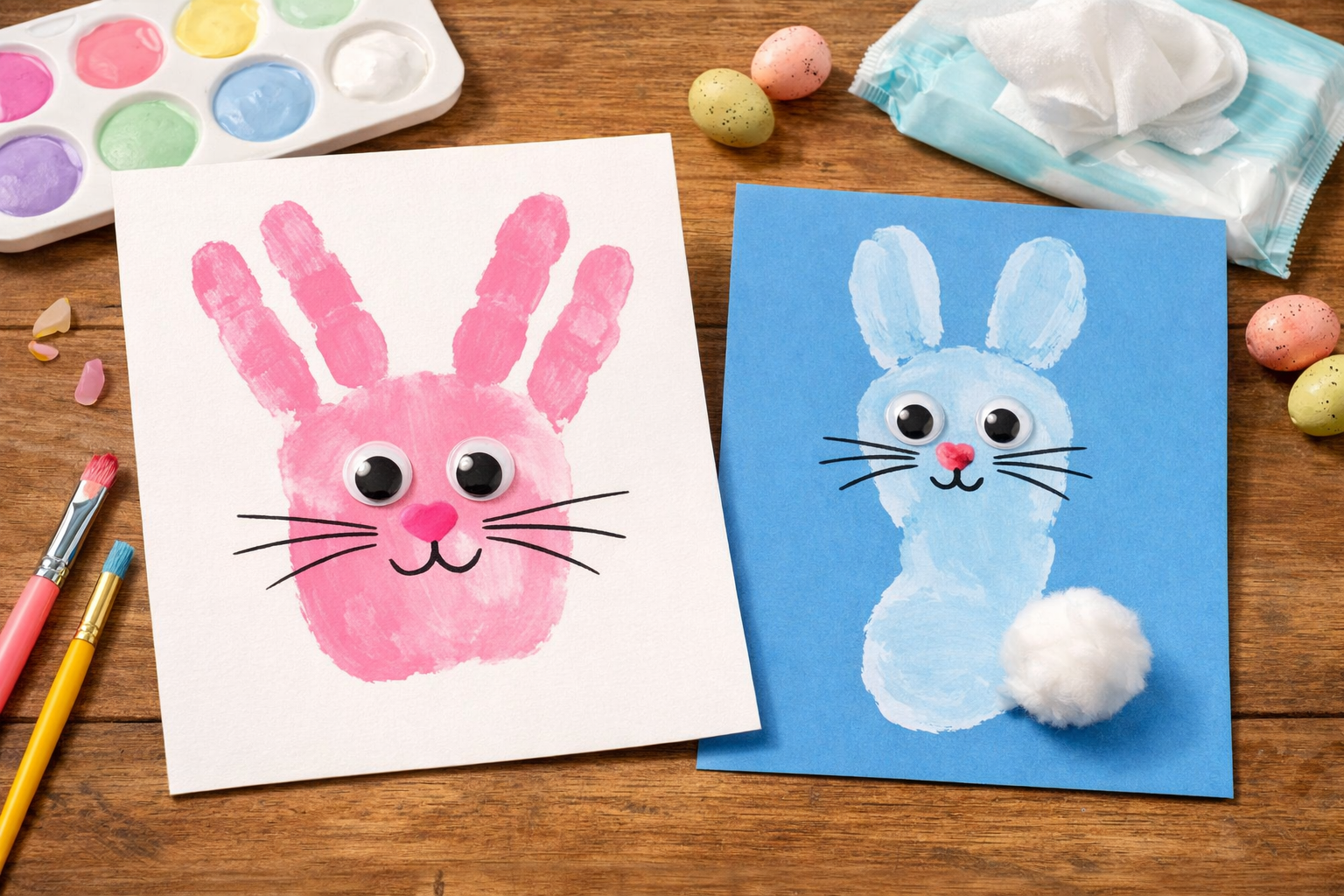
Handprint Bunny
Handprint crafts create precious keepsakes that capture how small your little one’s hands are right now. This bunny craft for toddlers is simple, mess-free (relatively!), and produces art you’ll want to frame.
What you’ll need:
Instructions:
- Paint your toddler’s hand with washable paint
- Press their hand onto the cardstock with fingers pointing up (these become bunny ears)
- Let the paint dry completely
- Add googly eyes to the palm area
- Draw a nose, mouth, and whiskers
- Optional: glue a cotton ball at the bottom for a tail
Why parents love this: Handprint crafts become treasured memories. Date the back of the paper, and you’ll have a beautiful reminder of this age.
Developmental benefits: Painting and pressing hands down helps toddlers understand body awareness and control. It’s also a wonderful introduction to printmaking concepts.
Variation idea: Try using different colors for seasonal themes—pastel pink for spring, white for winter, or even rainbow colors just for fun!
Toilet Paper Roll Bunny

Recycling toilet paper rolls into easy bunny crafts for toddlers teaches environmental awareness while creating adorable art. This three-dimensional craft is perfect for toddlers who love projects they can hold and play with. Exploring more creative avenues, toilet paper tube art ideas can inspire a variety of projects such as colorful decorations for the home or unique gifts for friends and family. This medium not only fosters creativity but also encourages children to repurpose materials, turning everyday items into masterpieces. As they delve into these imaginative endeavors, kids develop fine motor skills and confidence in their artistic abilities.
Materials needed:
Step-by-step process:
- Paint the toilet paper roll white (or wrap it in white construction paper)
- Let it dry completely
- Cut two long bunny ears from pink and white paper
- Glue the pink inner ear onto the white outer ear
- Attach ears to the inside back of the roll
- Glue on googly eyes and a pink pom pom nose
- Draw whiskers with a marker
- Glue a cotton ball to the back for a fluffy tail
Play value: Unlike flat crafts, this bunny can stand up on a shelf or be used in pretend play scenarios. Toddlers love making their bunny “hop” around the house!
Learning opportunity: This craft introduces basic geometry concepts as your child works with cylinders and circles. It’s also a great conversation starter about recycling and reusing materials.
For more ideas using everyday items, check out our collection of fun crafts for toddlers using everyday items.
Paper Cup Bunny
Paper cup bunnies are wonderfully three-dimensional and perfect for toddlers who love crafts they can actually use. This bunny craft for preschoolers can even become a special Easter basket or treat holder!
What you’ll need:
How to make it:
- Turn the paper cup upside down
- Cut two bunny ears from construction paper
- Glue ears to the top back of the cup
- Add googly eyes to the front
- Glue on a pom pom nose
- Poke small holes for whiskers and insert short pipe cleaner pieces
- Optional: fill the cup with Easter grass or treats
Functional craft benefit: This bunny isn’t just art—it’s a container! Your toddler can use it to collect small treasures, hold crayons, or store special snacks.
Skills practiced: Gluing items onto a curved surface requires different hand control than flat paper crafts, providing new fine motor challenges in a fun way.
Pom Pom Bunny
Pom pom bunnies are incredibly cute and offer wonderful tactile experiences for little hands. This is one of the fluffiest easy bunny crafts for toddlers you can make!
Creating your pom pom bunny:
- Glue the medium pom pom on top of the large pom pom (head and body)
- Cut two small ear shapes from pink felt
- Glue ears to the top of the head
- Add googly eyes
- Glue a tiny pink pom pom for the nose
- Optional: add pipe cleaner whiskers
Safety note: For toddlers under 3, supervise closely with small pom poms, or use larger sizes to avoid choking hazards.
Sensory benefits: The soft, fluffy texture of pom poms provides calming sensory input. Many toddlers love simply touching and squishing the pom poms before gluing them!
Display idea: These little bunnies look adorable sitting on a shelf or windowsill. Make several in different sizes to create a bunny family!
Egg Carton Bunny
Egg carton crafts are fantastic for teaching recycling while creating adorable bunny crafts for kids. This project transforms trash into treasure!
Instructions:
- Cut out one cup section from the egg carton
- Let your toddler paint it white
- Allow to dry completely
- Turn the cup upside down (this becomes the bunny body)
- Cut two long ears from pink paper
- Glue ears to the back
- Add googly eyes and a pink pom pom nose
- Glue a cotton ball on the back for a tail
Why this craft is special: It teaches children that everyday items can be transformed into art. This environmental awareness starts early and builds lifelong habits!
Developmental skills: Painting a three-dimensional object requires different brush control than flat paper, strengthening hand muscles and coordination.
Variation: Make multiple bunnies in different colors for a rainbow bunny family!
Footprint Bunny Card
Footprint bunny cards make precious keepsakes and wonderful gifts for grandparents. This Easter bunny craft for toddlers captures a moment in time that you’ll treasure forever.
Creating the card:
- Fold cardstock in half to create a card
- Paint the bottom of your toddler’s foot
- Press it onto the front of the card (toes pointing up become bunny ears)
- Let dry completely
- Add googly eyes to the heel area
- Draw a nose, mouth, and whiskers
- Optional: glue a tiny cotton ball for a tail
- Write a message inside
Gift-giving opportunity: These cards are perfect for Easter, spring birthdays, or “just because” surprises for family members who live far away.
Memory-making: Date the card and note your child’s age. Years from now, you’ll love looking back at how tiny those feet were!
Paper Roll Bunny
Paper roll bunnies (using paper towel or wrapping paper tubes) create larger-scale bunny crafts for toddlers that make impressive displays. These bunnies have personality and presence!
- Cover the tube with white paint or wrap it in white paper
- Cut large bunny ears from white paper with pink inner ears
- Glue ears inside one end of the tube
- Add googly eyes and a pom pom nose to the front
- Draw whiskers and a mouth
- Glue cotton balls to the opposite end for a fluffy tail
- Optional: add paper feet at the bottom
Display advantage: These bunnies stand up beautifully and can become part of spring decorations around your home.
Learning extension: Use your bunny in counting games, color identification activities, or storytelling sessions.
This craft works wonderfully alongside other easy art projects for toddlers that build confidence and creativity.
Coffee Filter Bunny
Coffee filter bunnies offer unique texture and beautiful results when decorated with markers and water. This easy bunny craft for kids combines art and science in one activity!
- Let your toddler color the coffee filter with washable markers
- Lightly spray with water and watch the colors blend (magical!)
- Let dry completely
- Fold the filter in half and glue to cardstock
- Cut bunny ears from pink paper and glue to the top
- Add googly eyes
- Draw a nose, mouth, and whiskers
Science moment: When you spray the water, the colors blend and spread. This is a perfect opportunity to talk about how water moves colors around!
Artistic freedom: There’s no wrong way to color the filter, which builds confidence in creative expression.
Sock Bunny
Sock bunnies are soft, cuddly, and perfect for toddlers who love stuffed animals. This is a slightly more involved bunny craft for preschoolers, but the results are absolutely worth it!
- Fill the sock about 2/3 full with rice or stuffing
- Tie off the top with a rubber band
- Create a head by placing another rubber band about 1/3 down
- The top portion becomes bunny ears—separate them with your fingers
- Glue on googly eyes and a pink pom pom nose
- Cut small inner ears from pink felt and glue inside the ears
- Optional: tie a ribbon around the neck
Adult help needed: This craft requires more parent involvement than others, making it a wonderful bonding activity.
Cuddle factor: Unlike paper crafts, this bunny becomes a soft toy your child can actually play with and snuggle!
Paper Accordion Bunny
Accordion fold bunnies add dimension and movement to easy bunny crafts for toddlers. The folding technique introduces early engineering concepts in a playful way!
- Cut a long strip of white paper (about 2 inches wide, 12 inches long)
- Help your toddler fold it accordion-style (back and forth)
- This becomes the bunny’s body
- Cut a circle from white paper for the head
- Glue the accordion body to the head
- Cut and attach pink ears
- Add googly eyes and a pom pom nose
- Draw whiskers and a mouth
Movement magic: The accordion body bounces and moves, which delights toddlers! They can make their bunny “hop” by gently pressing it down and releasing.
Math connection: Folding paper in a pattern introduces early geometry and sequencing skills.
Paper Bowl Bunny
Paper bowl bunnies are similar to paper plate crafts but offer a slightly different shape and depth. This bunny craft for toddlers creates a three-dimensional face that seems to pop right off the table!
- Turn the paper bowl upside down
- Cut two long bunny ears from pink paper
- Glue ears to the back of the bowl
- Add googly eyes to the front
- Glue on a pink pom pom nose
- Draw a mouth and whiskers
- Glue cotton balls around the rim for a fluffy border
3D advantage: The curved shape of the bowl gives this bunny more dimension than flat crafts, making it extra special for display.
Adaptation tip: If you don’t have paper bowls, you can use the same technique with small paper plates!
Cupcake Liner Bunny
Cupcake liner bunnies transform baking supplies into adorable Easter bunny crafts for toddlers. The textured liners add visual interest and tactile variety!
- Flatten two cupcake liners
- Glue them side-by-side on cardstock (these become the bunny’s cheeks)
- Cut bunny ears from pink paper
- Glue ears above the liners
- Add googly eyes
- Glue a pink pom pom nose where the liners meet
- Draw whiskers extending from the liners
Texture exploration: The ridged texture of cupcake liners provides different sensory input than smooth paper, enriching your child’s tactile experience.
Sponge Paint Bunny
Sponge painting bunnies introduces a new painting technique while creating soft, textured bunny crafts for kids. This is perfect for toddlers who love getting messy!
- Draw or print a simple bunny outline on cardstock
- Cut the sponge into small squares
- Let your toddler dip sponge pieces in paint
- Dab the sponge inside the bunny outline to fill it with color
- Let dry completely
- Add googly eyes and a pink pom pom nose
- Draw or paint whiskers and ears
Sensory benefits: Sponge painting feels completely different from brush painting, offering new tactile experiences for developing hands.
Color mixing opportunity: Provide several paint colors and watch your toddler discover what happens when colors overlap!
This activity pairs beautifully with other sensory play activities that engage multiple senses.
Bunny Headband Craft
Bunny headbands transform your toddler into an adorable rabbit for dress-up play. This easy bunny craft for toddlers becomes a wearable costume piece!
- Measure a strip of cardstock to fit around your toddler’s head
- Staple or tape the ends together to form a band
- Cut two large bunny ears from white paper
- Cut smaller pink inner ears and glue them on
- Attach the ears to the headband
- Let your child decorate with markers
- Adjust the fit and secure
Dress-up extension: Once the headband is complete, encourage imaginative play. Your toddler can hop like a bunny, pretend to eat carrots, or act out bunny stories!
Social play opportunity: Make multiple headbands so siblings or friends can all be bunnies together. This builds cooperative play skills.
Paper Chain Bunny
Paper-chain bunnies teach sequencing and pattern-making as preschoolers create unique bunny crafts. This craft builds early math skills in a playful context!
- Help your toddler create a paper chain by looping strips and gluing ends
- Make a chain of 5-6 loops (this becomes the bunny body)
- Cut a circle from white paper for the head
- Attach the head to one end of the chain
- Cut and glue pink ears to the head
- Add googly eyes and a pink pom pom nose
- Draw whiskers and a mouth
Pattern learning: As your child creates the chain, they’re learning about sequences and how parts connect to make a whole.
Length variation: Make longer or shorter bunnies to introduce measurement concepts!
Bunny Bookmark

Bunny bookmarks combine crafting with literacy encouragement. This easy bunny craft for kids creates a functional item that makes reading time extra special!
- Cut a rectangle from cardstock (about 2 inches wide, 6 inches long)
- Round one end
- Cut small bunny ears and glue to the rounded end
- Add googly eyes and a pink pom pom nose
- Draw whiskers and a mouth
- Let your child decorate the rest with markers
- Optional: laminate for durability
Reading connection: Every time your toddler sees their bunny bookmark, they’ll associate reading with the fun they had creating it!
Gift idea: These make wonderful homemade gifts for teachers, librarians, or book-loving friends and family.
This craft works wonderfully with letter recognition activities to build early literacy skills.
Paper Plate Bunny Mask
Paper plate bunny masks bring dramatic play to life with wearable Easter bunny crafts for toddlers. This craft becomes a costume piece for endless imaginative adventures!
- Cut eye holes in the paper plate (adult task)
- Cut two large bunny ears from white paper with pink inner ears
- Glue ears to the top of the plate
- Add a pink pom pom nose below the eye holes
- Draw whiskers and a mouth
- Glue cotton balls around the edge for fluff
- Attach a popsicle stick handle or elastic string to hold the mask
Dramatic play value: Masks encourage toddlers to step into character, building imagination and storytelling skills.
Photo opportunity: These masks make adorable photo props for spring and Easter pictures!
Safety note: Always supervise mask play with toddlers to ensure they can see and breathe comfortably.
🐰 Bunny Craft Materials Checklist
How Do Bunny Crafts Support Child Development?
Bunny crafts support child development by strengthening fine motor skills, encouraging creativity, building hand-eye coordination, and providing sensory experiences. When toddlers cut, glue, paint, and assemble bunny crafts, they’re practicing essential skills that prepare them for writing, self-care tasks, and problem-solving.
What Materials Do You Need for Easy Bunny Crafts for Toddlers?
For most easy bunny crafts for toddlers, you’ll need basic supplies, including paper plates, construction paper (especially pink and white), glue sticks, child-safe scissors, washable paint, cotton balls, googly eyes, and pink pom poms. These budget-friendly materials can be used to create dozens of different bunny projects.
| Category | Items | Where to Find |
|---|---|---|
| Paper Products | Paper plates, construction paper, cardstock, coffee filters, cupcake liners | Dollar store, grocery store |
| Adhesives | Glue sticks, white school glue | Any store, often already at home |
| Cutting Tools | Child-safe scissors with blunt tips | Craft stores, online |
| Paint Supplies | Washable tempera paint, brushes, sponges | Dollar store, craft stores |
| Decorative Items | Cotton balls, googly eyes, pom poms, pipe cleaners | Craft stores, dollar store |
| Recycled Materials | Toilet paper rolls, egg cartons, paper bags, socks | Free from home! |
Budget-friendly shopping tips:
When Is the Best Time to Do Bunny Crafts with Toddlers?
The best time to do bunny crafts with toddlers is during spring (March through May) and especially around Easter, but these adorable projects work year-round whenever your child shows interest. Choose times when your toddler is well-rested and fed for the most enjoyable experience.
Flexibility is key: If your toddler isn’t interested today, save the materials and try again tomorrow. Forcing crafts creates negative associations, while following their lead builds enthusiasm!
How Can You Adapt Bunny Crafts for Different Ages and Abilities?
Adapt bunny crafts for different ages and abilities by adjusting the complexity, providing varying levels of support, and modifying materials to match each child’s developmental stage. Pre-cut pieces for younger toddlers, offer more independence to older preschoolers, and modify techniques for children with different learning needs.
What Are Common Mistakes to Avoid with Toddler Bunny Crafts?
Common mistakes to avoid include unrealistic expectations for the final product, choosing projects that are too complex, failing to prepare materials in advance, pressuring your child to participate when they aren’t interested, and focusing on perfection rather than the creative process.
FAQ